When we read a good book, we often feel the urge to share: this piece of history is truly fascinating, this figure deserves another discussion, and on this question, I still have a different view... But when we sit down to write, or begin to speak, we realize: understanding a story and telling it in a way that makes people want to listen are two different things.
How do we find clues amid vast historical materials? How do we turn years of reading and reflection into a work that carries our own voice? In an age when AI can rapidly generate text, what do a creator's own accumulation, judgment, and expression still mean?
On November 22, the Fenghua Wendao "Among Three Walkers, There Must Be a Teacher" Cultural Sharing Series invites history researcher and history host Fengluo Baiyi to talk face to face with everyone about reading, research, and creation.
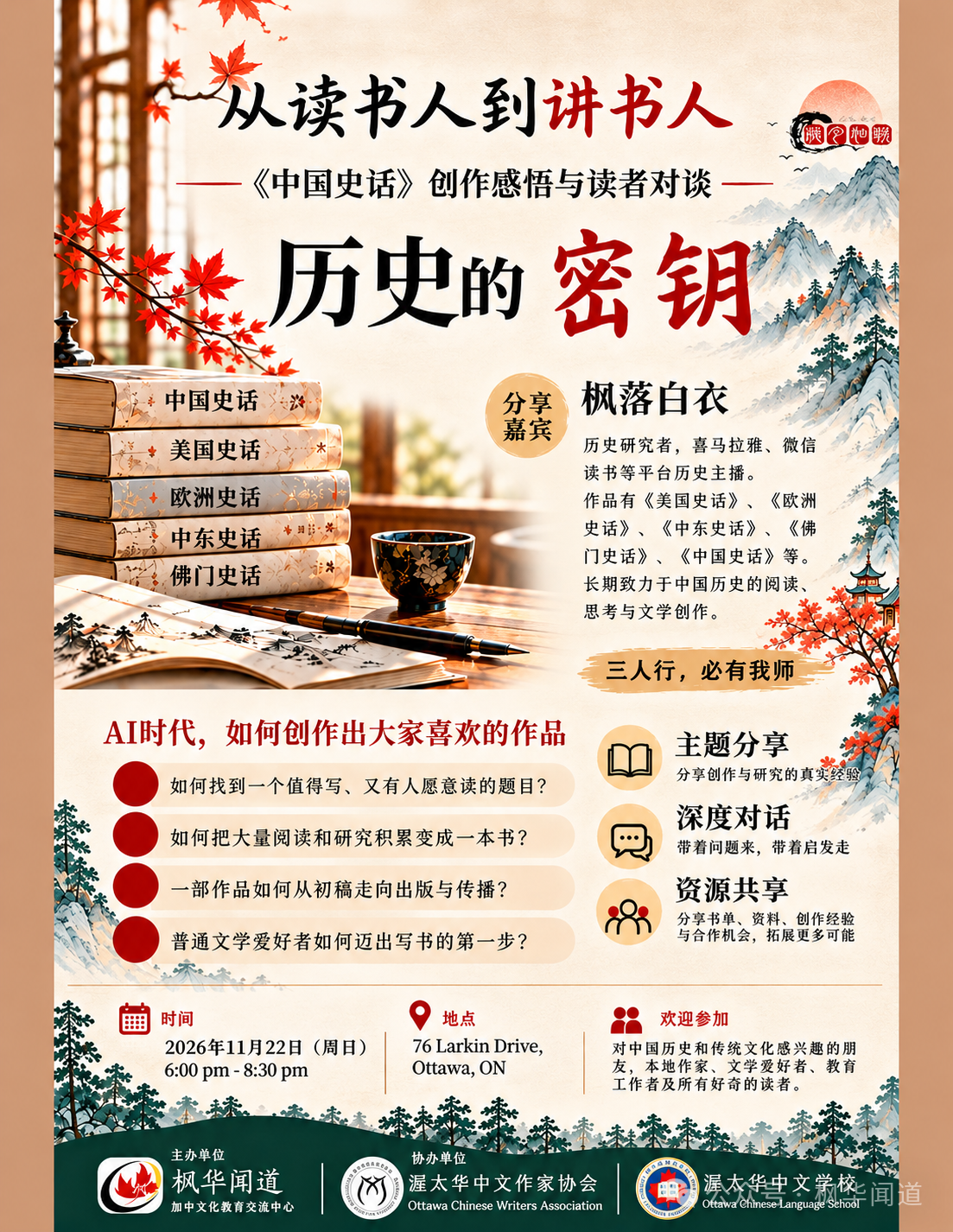
The Key to History: From Reading to Expression
The theme of this event is "From Reader to Storyteller — Reflections on Creating 'Tales of Chinese History' and a Conversation with Readers."
Fengluo Baiyi has long been devoted to the reading, reflection, and literary creation of Chinese history. He is also a history host on platforms such as Ximalaya and WeChat Reading, with works including "Tales of American History," "Tales of European History," "Tales of Middle Eastern History," "Tales of Buddhist History," and "Tales of Chinese History."
On the journey from reader to storyteller, how does one choose a topic, organize materials, and form one's own understanding? And how does one bring history closer to today's readers? This time, he will share his experience and insights in connection with the creation of "Tales of Chinese History."
In the AI Era, How Do We Create Works That People Love?
As reading accumulates, there is no shortage of things we want to write, yet between "I want to write" and actually beginning, there are often many concrete questions:
How do you find a topic worth writing about that people are also willing to read?
How do you turn extensive reading and research into a book?
How does a work move from draft to publication and dissemination?
For ordinary literature enthusiasts, how do you take the first step toward writing a book?
These questions will be the starting points for this sharing and exchange.
If you also have a topic you have long delayed putting to paper, a manuscript you have revised repeatedly, or a question from your reading that you still cannot let go of, you are welcome to bring it to the event and explore it together.
Come with Questions, Leave with Inspiration
In addition to the thematic sharing, the event also includes reader dialogue and resource sharing, where everyone can exchange book lists, materials, creative experience, and opportunities for collaboration.
"Among three walkers, there must be a teacher." Everyone's reading experience is different, and the questions they focus on are different too. Perhaps another person's follow-up question can open a direction we never thought of; a piece of creative experience can also give us a little more confidence in our next step.
Friends interested in Chinese history and traditional culture, local writers, literature enthusiasts, educators, and all curious readers are welcome to attend.
Let us start with a book, a story, and a question — talk about history, and also about how to find your own expression.
Event Information
- Time: Sunday, November 22, 2026, 6:00 — 8:30 PM
- Location: 76 Larkin Drive, Ottawa, ON
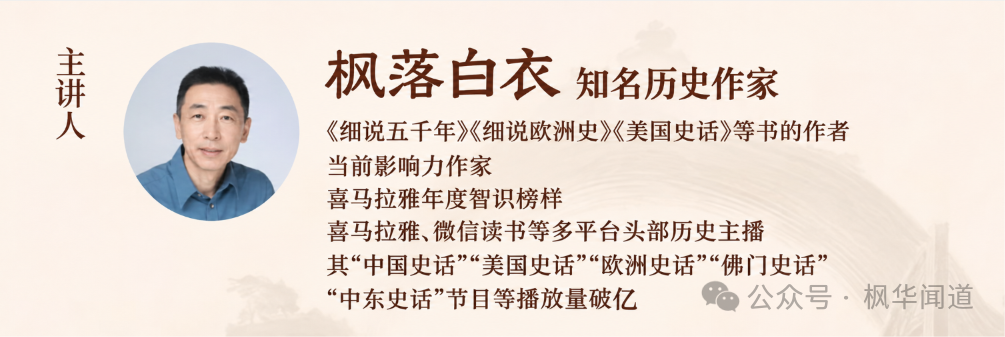
- Guest Speaker: Fengluo Baiyi
Please share this with friends who love reading, history, and writing.
See you on November 22!